
Water damage is one of the most stressful events a Michigan homeowner can face. Whether it’s a burst pipe in January, a flooded basement after a heavy summer storm, or a slow leak that finally let go behind a wall — the clock starts ticking the moment water enters your home. What you do in the first few hours matters enormously, both for your property and for your insurance claim.
Step One: Stop the Source
Before anything else, stop the water. If a pipe has burst, find your main shutoff valve and turn it off. If the source is a roof leak or a flooded area from outside, do what you safely can to prevent additional water from entering — move belongings out of the affected space, place buckets, use plastic sheeting if it’s accessible. Safety first: if there is standing water near electrical panels or outlets, do not enter until power is confirmed off.
Step Two: Document Everything Before You Touch It
This step is critical and homeowners often skip it in a panic. Before any cleanup begins, pull out your phone and take photos and video of everything — every wet wall, every saturated floor, every damaged piece of furniture or personal property. Walk through the entire affected area and narrate what you’re seeing. This documentation is the foundation of your insurance claim. The more thorough you are, the harder it is for an adjuster to minimize your loss.
- Photograph water lines on walls showing depth of intrusion
- Video damaged ceilings, cabinetry, flooring material, and personal property
- Note the date, time, and what you believe caused the damage
- Save any wet materials or damaged items until your adjuster has seen them
Step Three: Call Your Insurance Carrier
Report the claim to your homeowner’s insurance company as soon as possible. Michigan homeowners typically have coverage for sudden and accidental water damage — things like a burst pipe, appliance failure, or ice dam. Gradual leaks or flood water from outside typically fall under different coverage categories, so knowing your policy before an emergency is valuable. When you call, get your claim number in writing and ask for your adjuster’s contact information.
Step Four: Call a Licensed Restoration Contractor
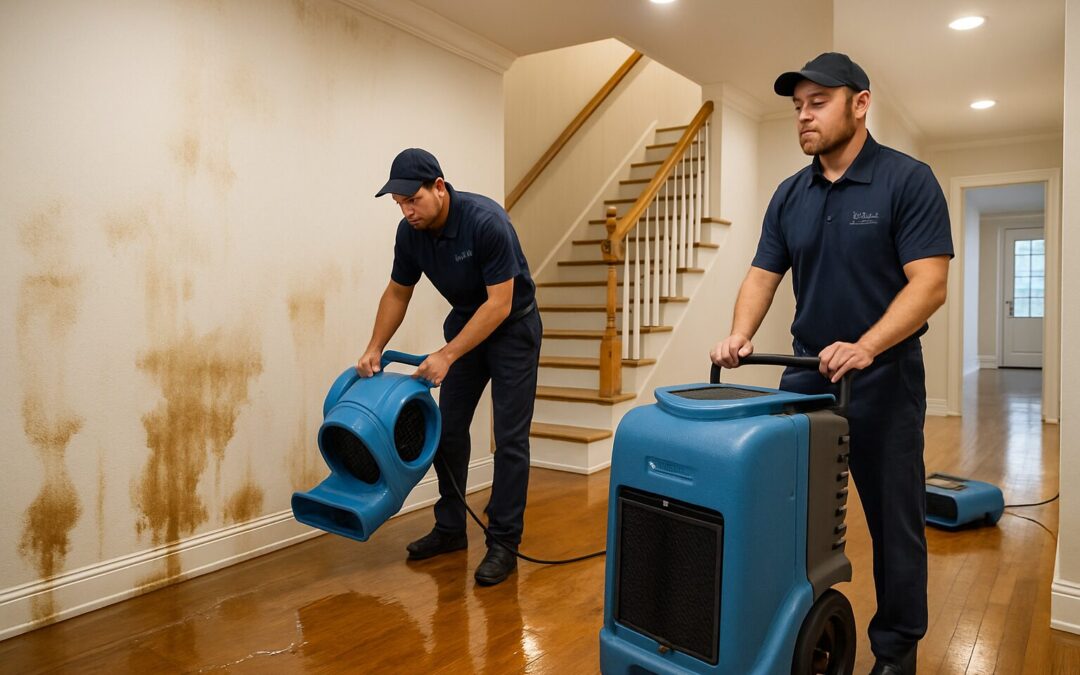
Water damage restoration is a specialty trade. Mitigation — the process of extracting water, drying structural materials, and preventing secondary damage — requires professional-grade equipment and trained technicians. Do not wait for your adjuster to arrive before starting mitigation; most policies actually require prompt action to prevent further damage, and delays give mold a foothold.
A qualified restoration contractor will:
- Deploy industrial extractors and air movers to begin drying immediately
- Use moisture meters to map the full extent of water intrusion (what’s wet isn’t always visible)
- Set dehumidifiers calibrated to Michigan’s climate conditions
- Document the scope of loss in a format your insurance carrier recognizes
Why Mold Speed Matters
Mold can begin forming in wet building materials within 24 to 48 hours under the right conditions. Michigan’s humidity — especially in basements and attics — accelerates that timeline. Once mold takes hold in drywall, insulation, or structural framing, the remediation cost grows significantly. Prompt, professional mitigation is not just about drying out your home faster; it’s about preventing a water damage claim from becoming a full-scale mold remediation project.
How the Insurance Claim Process Works
After you file your claim, your carrier will assign an adjuster — either a staff adjuster who works directly for the insurer, or an independent adjuster contracted to handle the loss. The adjuster’s job is to determine the scope and value of your claim. They will inspect the damage, review your documentation, and produce an estimate using industry-standard pricing software.
It’s important to understand that an adjuster’s first estimate is not always the final word. If scope is missed or pricing is below local market rates, a licensed contractor can supplement the claim with additional documentation. This is a normal and legitimate part of the insurance restoration process.
From First Call Through Final Rebuild — How Phase III Helps
Phase III Construction is a licensed Michigan restoration contractor serving Wayne, Oakland, Washtenaw, and Livingston Counties. We work directly with your insurance carrier throughout the entire claim process — from the initial scope of loss and mitigation documentation, through the rebuild, and through any supplements needed to make sure the approved amount reflects the actual cost to restore your home to pre-loss condition.
We’re paid from your insurance proceeds for the work we perform. You pay your deductible. That’s it.
If you’ve experienced water damage in your Michigan home, don’t wait. The faster mitigation starts, the better the outcome — for your home and for your claim. Contact Phase III Construction today for a same-day response.