Dealing With Damage Right Now?
Phase III Construction responds 24/7 across SE Michigan. Licensed Builder. BBB A+.
☎ Call (734) 237-7322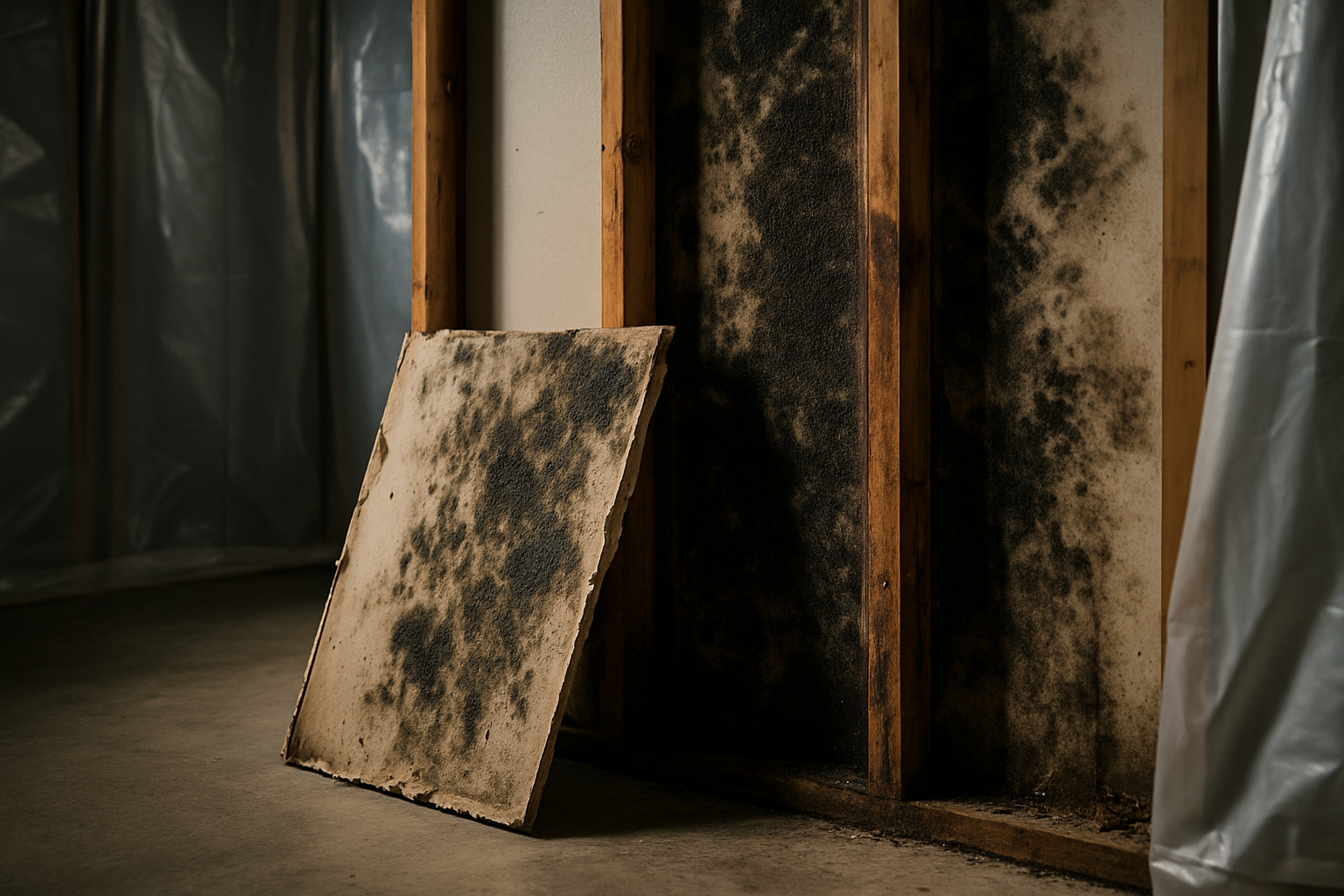
Mold is one of the most anxiety-inducing words in home restoration — and for good reason. After any water damage event, mold is a real and time-sensitive concern. Here’s what you actually need to know about how fast mold grows, how to recognize it, and what to do about it.
How Fast Does Mold Actually Grow?
Under the right conditions, mold can begin colonizing a surface within 24 to 48 hours of water exposure. The right conditions aren’t particularly unusual: temperatures between 60 and 80 degrees, a moisture source, and an organic material to feed on (drywall, wood framing, paper backing on insulation, carpet padding — all qualify).
This is why the timeline after water damage matters so much. A burst pipe that gets addressed in two hours has very different mold risk than a slow leak behind a wall that went undetected for two weeks. In the latter case, assume mold is present until testing says otherwise.
The Most Common Places Mold Hides After Water Damage
- Behind drywall — Water migrates through wall assemblies quickly. The paper facing and organic compounds in drywall are prime mold food.
- Under flooring — Hardwood and laminate flooring trap moisture against the subfloor. Carpet retains moisture for days even after surface drying appears complete.
- In insulation — Fiberglass batts wick moisture and hold it. Wet insulation rarely dries out adequately and typically needs to be replaced after any significant water event.
- In HVAC systems — If a water event affects ductwork or an air handler, spores can be distributed throughout the home. This is one of the most serious mold scenarios in restoration.
- In wall cavities and crawl spaces — These areas have limited airflow and can hold moisture for weeks without any visible surface indication.
How to Tell If You Have Mold
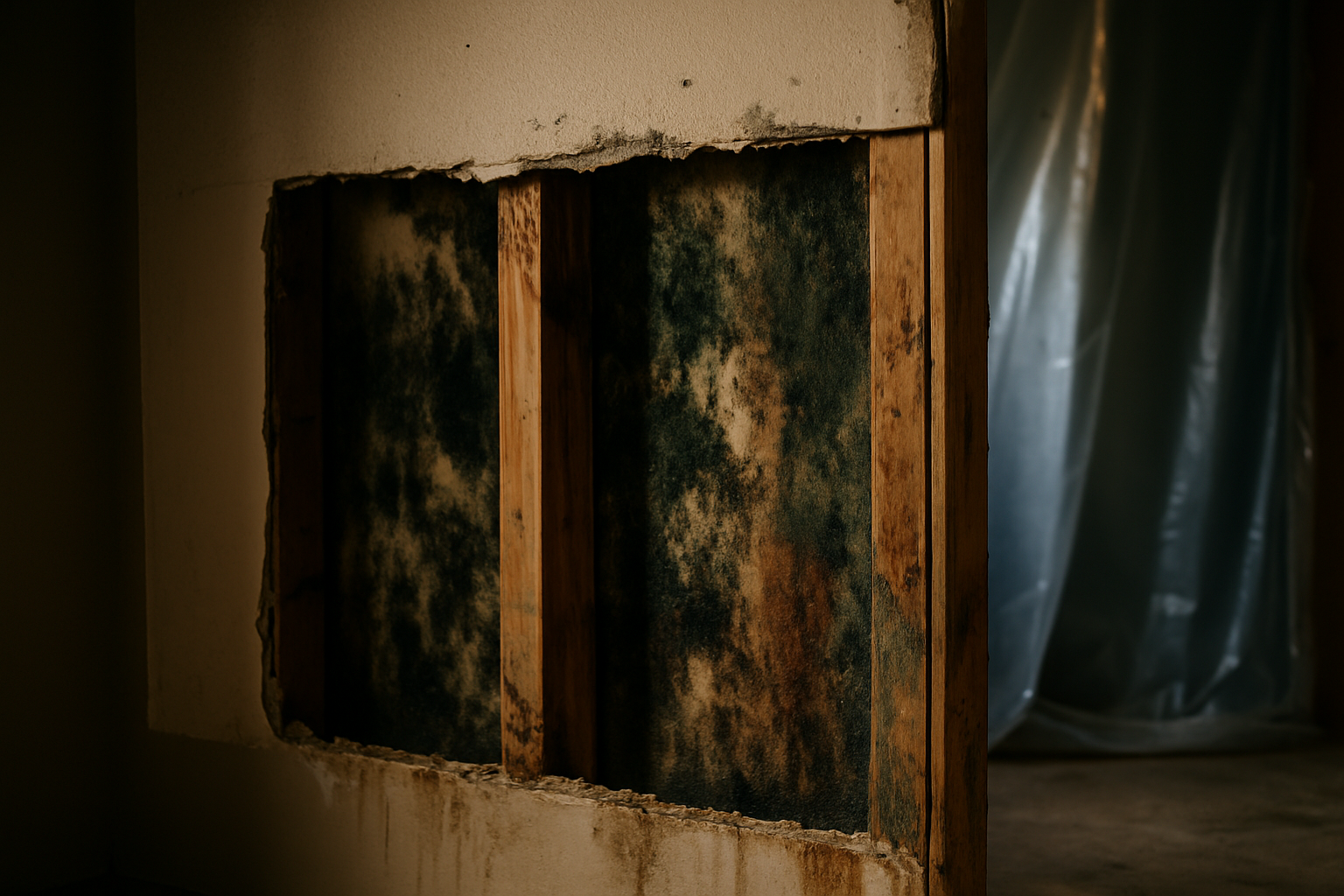
Visible mold often looks like dark spots, green or black discoloration, or fuzzy patches on surfaces. But visible mold is actually the tip of the iceberg — by the time you can see it, the colony is already established and the spore count in the air is elevated.
A musty odor — even without visible growth — is a strong indicator of mold presence. If a room smells musty after a water event and the source isn’t obvious, assume mold until it’s ruled out.
Should You Test for Mold?
Professional mold testing (air sampling and surface sampling) is worth doing if: the water damage was not addressed within 48 hours, the damage affected insulation or wall cavities, or the odor persists after drying is complete. Testing results can also be important for your insurance claim.
What Remediation Looks Like
Professional mold remediation involves containment (sealing the affected area to prevent spore spread), HEPA-filtered negative air pressure, removal of affected materials, HEPA vacuuming of all surfaces, antimicrobial treatment, and final clearance testing to confirm the space is clean before reconstruction begins.
Do not let any contractor skip the clearance testing phase. Without post-remediation verification, you have no confirmation the problem was actually resolved.
What You Shouldn’t Do
Don’t try to clean mold with bleach and call it done. Bleach kills surface mold but doesn’t penetrate porous materials — and it doesn’t address the moisture source. Don’t paint over mold. Don’t run fans and hope it dries out. These approaches don’t fix the problem; they delay it and give it time to spread.
Immediate Steps If You Suspect Mold After Water Damage
Acting in the first 24–48 hours matters most. Here’s what to do:
- Stop the water source — shut off supply if it’s a burst pipe or appliance failure
- Document everything before cleanup — photos and video of all affected areas
- Do not run your HVAC system — it disperses spores through every duct in the house
- Remove accessible standing water if it’s safe to do so, but don’t disturb visibly moldy materials
- Call a licensed restoration contractor — amateur mitigation voids many insurance policies
Michigan homeowners have the right to select their own restoration contractor. You do not have to use whoever the insurance company recommends.
Phase III Construction handles mold assessment and remediation as part of our water damage restoration process. If you’re dealing with water damage — whether it happened yesterday or weeks ago — call us at (734) 237-7322. We’ll assess the situation honestly and tell you what needs to happen next.
Phase III Construction handles water & flood damage restoration for homeowners across SE Michigan. Michigan Builders License #262000615. We work directly with your insurance company and fight your claim from start to finish. Get an inspection →
Ready to Rebuild Now?
Call Phase III Construction today — we handle the insurance battle so you don't have to.
Get Your InspectionPART OF THE WATER & FLOOD GUIDE
This article is part of Phase III's complete Water & Flood resource series.
← Back to the complete Water & Flood guide: How Long Does Water Damage Restoration Take? A Michigan Homeowner's Guide